An Equilibrium Valuation of Bitcoin and Decentralized Network Assets
Working paper, March 2018 Part of Digital money and assets
Abstract
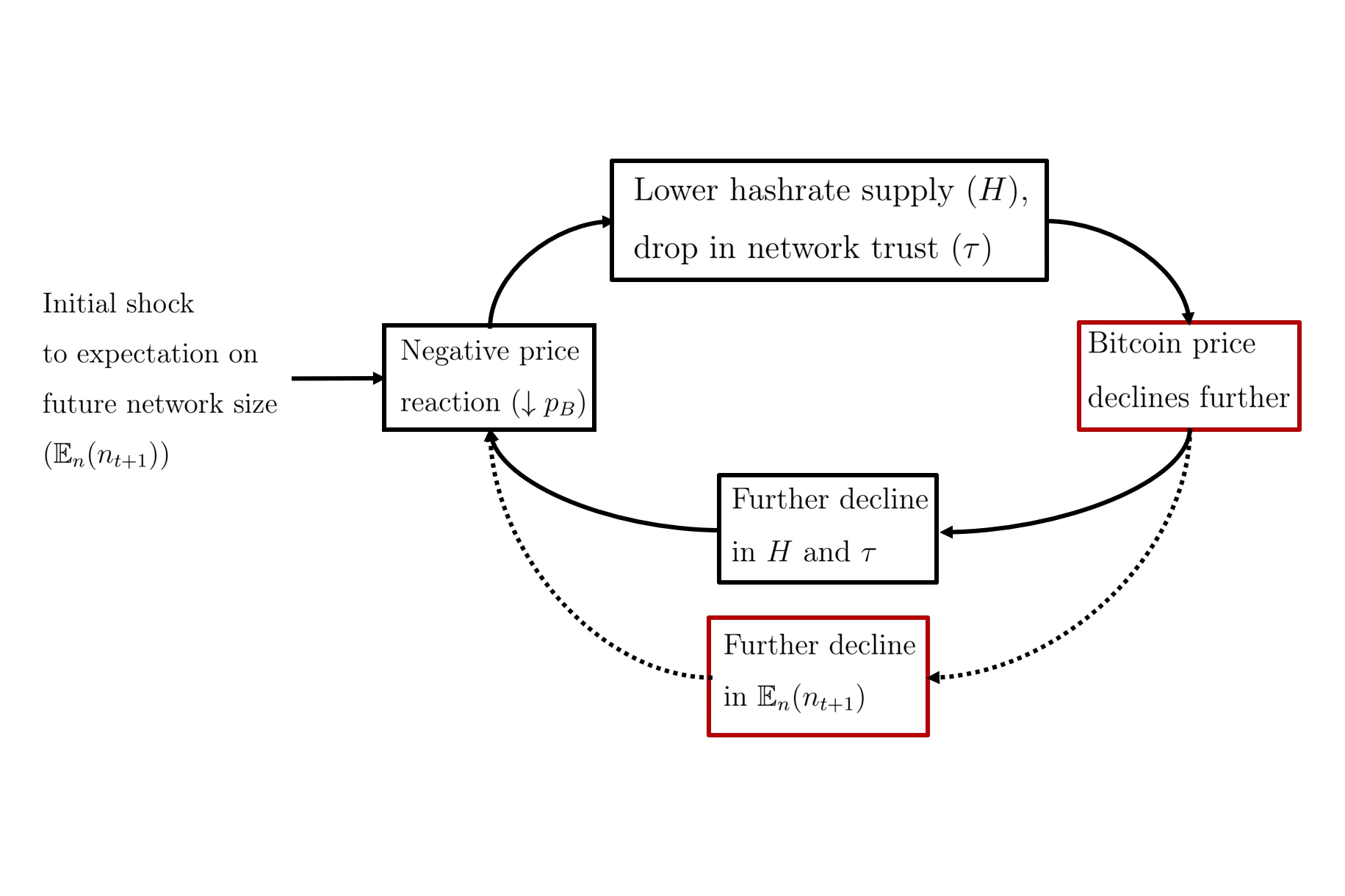
We address the valuation of bitcoins and other blockchain tokens in a new type of production economy: a decentralized financial network (DN). An identifying property of these assets is that contributors to the network trust (miners) are compensated in units of the same asset that are used by consumers of network applications, which we call unity. As a result, the overall production (hashrate) that affect network trust and the bitcoin price are jointly determined. We characterize the demand for bitcoins and the supply of resources that secure the network and show that the valuation of bitcoins can be obtained by solving a fixed-point problem and study its determinants. We show that the unity property induces "price-hashrate spirals" that amplify the price impact of demand and supply shocks vis-à-vis traditional assets.
Cite
Andrea Buraschi and Emiliano S. Pagnotta (2018). "An Equilibrium Valuation of Bitcoin and Decentralized Network Assets." Working paper, March 2018.
Presentations
AFA, NBER Asset Pricing Summer Institute, Finance Theory Group
- 12–13 Jul 2018 NBER Summer Institute, Asset Pricing
- 25 Jun 2018 Finance Theory Group (FTG) Meeting, LBS London